
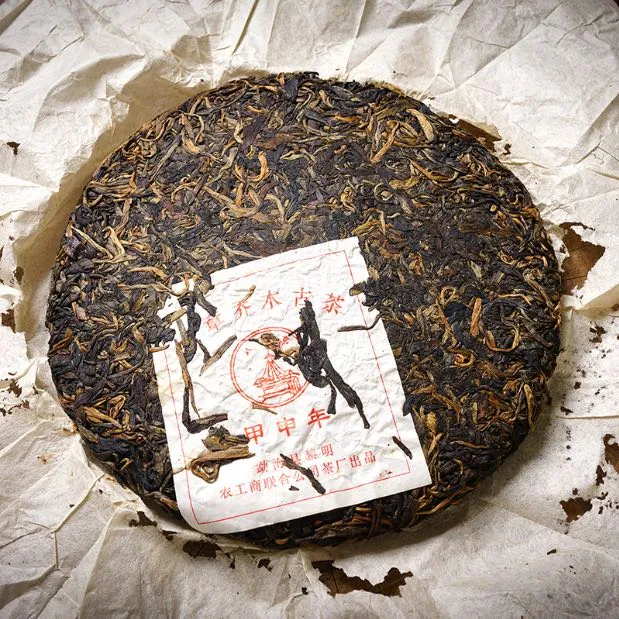
In 2026, the world of high-end auctions witnessed a staggering moment: a single “tong” a traditional stack of seven compressed tea cakes sold for the equivalent of $3.3 million. This wasn’t a rare vintage of wine or a centuries-old whisky. It was pu-erh tea.
For the uninitiated, such a price tag might seem like an anomaly. But for serious collectors of pu-erh tea at TeanLeaf specializes in sourcing the finest loose leaf pu-erh tea., it is proof of a fundamental truth: Pu Erh Tea Aged is a living asset. Unlike almost any other agricultural product, it doesn’t depreciate; it appreciates, transforming from a simple leaf into a chemically distinct masterpiece over decades.
Biological Alchemy: Why Pu Erh Ages While Others Fade
Most teas have a ruthlessly short shelf life. Buy a delicate green tea, and within two years, it becomes flat and forgettable. Pu Erh Tea operates under entirely different biological rules.
The Microbial Engine
The transformation happens at a microscopic level during the aging process of pu-erh. Beneficial microorganisms—most notably Aspergillus niger—colonize the compressed leaves. As noted in the process of aging pu-erh tea. Global Tea Hut Aging Guide, this slow, controlled fermentation breaks down cell walls and builds layers of depth that cannot be manufactured on a faster timeline.
Ancient Roots and Rare Minerals
At TeanLeaf, we prioritize tea sourced from Arbor trees, many of which are several hundred years old. Their deep root systems draw minerals from the mountain soil that younger plantation bushes simply cannot reach. This mineral complexity acts as the “scaffolding” for long-term aging, providing the biochemical richness necessary for a cake to thrive across decades.
Sheng vs. Shou: Two Paths to the Collector’s Cup
Understanding the value of aged tea requires knowing the two primary styles, each with a different relationship to time.
- Sheng (Raw) Pu Erh: The undisputed king of the collector’s world of Yunnan tea. It is a living tea whose microbial activity continues for decades. Collectors often target a 20+ year aging horizon, watching a sharp, tannic young cake evolve into a complex, valuable vintage.
- Shou (Ripe) Pu Erh: Developed in the 1970s, this style uses “wet-piling” (Wo Dui) to accelerate the fermentation process of pu-erh tea. While collectors drink it for its immediate earthy smoothness, it is generally not the primary vehicle for long-term financial investment.
The Sensory Payoff: From Astringency to Sandalwood
Why do collectors obsess over the age? Because the sensory transformation is nothing short of remarkable.
The Returning Sweetness (Hui Gan)
Young Sheng can be bracingly bitter. But with age, that astringency softens into Hui Gan—a “returning sweetness” that blooms at the back of the throat after enjoying loose leaf pu-erh. It is a meditative sensation that collectors describe as the tea “speaking back.”
The Velvet Shift
As the tea matures, the mouthfeel evolves from thin and angular to thick, coating, and velvety. Prized specimens develop an “oily” weight and aromatic profiles of camphor, sandalwood, dried fruit, and aged wood.
The Investment Strategy: 10–20% Annual Appreciation
Aged Pu Erh occupies a unique position as a consumable commodity that gains value as it is consumed.
- Uncorrelated Assets: Pu Erh pricing moves on regional harvests and storage reputation rather than stock market volatility, especially from Yunnan. Premium cakes have historically seen 10% to 20% annual appreciation.
- The Consumption-Scarcity Engine: Every pot brewed reduces the global supply. As collectors drink aged cakes, the remaining inventory becomes exponentially rarer.
- Provenance is Everything: Material from legendary regions like Lao Ban Zhang or Bing Dao is renowned for its unique tea trees and high-quality pu-erh. commands extraordinary premiums for loose leaf varieties. At TeanLeaf, we emphasize verifiable storage history, as improper conditions like excess humidity can destroy a cake’s value.
The Longevity Factor: Wellness in Every Drop
The premium price of aged Pu Erh is also sustained by its functional wellness profile, which matures alongside its flavor.
- Theabrownins: Extended aging concentrates these dark pigments, which research links to reductions in LDL cholesterol.
- Digestive Harmony: Unlike green tea, which can be harsh on the stomach, the prolonged fermentation of aged Pu Erh breaks down tannins, creating a “warming” liquor that aids metabolism and digestion.
Conclusion: An Investment in Excellence
When health function reinforces sensory excellence and financial appreciation, the premium price of Aged Pu Er isn’t a mystery it’s a logical conclusion. Whether you are looking to start a collection or simply experience the “Cha Qi” (tea energy) of a 20-year-old vintage, TeanLeaf is your gateway to the world’s most sophisticated tea.
Are you ready to own a piece of living history? Explore our curated aged collections of pu-erh tea at TeanLeaf.

